



Is a Used Electric Loader Worth It? Key Battery Diagnostics and Maintenance Tips for Pre-Owned Units
Introduction
The global heavy equipment landscape is undergoing an unprecedented transition as construction firms, mining operations, and indoor material handling facilities rapidly adopt battery-electric machinery. Driven by strict environmental regulations and corporate ESG mandates, contractors are replacing traditional internal combustion engines with clean, low-noise powertrains. However, purchasing brand-new electric equipment often requires a steep upfront capital outlay. Evaluating a high-quality pre-owned Electric Loader offers an attractive alternative, enabling fleet managers to achieve zero-emission performance while significantly lowering total cost of ownership on a manageable budget.
Navigating the secondary market for electric machinery requires balancing initial capital expenditure savings against long-term operational profitability. While traditional buyers focused primarily on diesel engine hours and transmission wear, pre-owned electric equipment evaluation centers on battery health, power electronics, and thermal management systems. As Dr. Frank Meyer, Senior Electromobility & Heavy Equipment Analyst, observed: "The secondary market for battery-electric heavy machinery is maturing rapidly; when fleet operators perform rigorous battery diagnostics prior to acquisition, a pre-owned electric wheel loader delivers equal productivity to a diesel equivalent at a dramatically lower lifetime energy cost."
By acquiring a workshop-inspected pre-owned Electric Loader, contractors bypass heavy initial depreciation while retaining full access to low-noise, zero-emission job sites. Combining lower energy costs, minimal powertrain maintenance, and immediate machine availability, pre-owned electric units represent a highly profitable gateway into sustainable fleet management.
The Financial & Operational ROI of a Used Electric Loader
Investing in a pre-owned Electric Loader offers compelling financial advantages, starting with substantial upfront capital savings. Brand-new battery-electric heavy machinery carries a premium retail price due to initial R&D and battery pack production costs. Purchasing a pre-owned unit allows fleet operators to bypass this steep initial depreciation curve, acquiring cutting-edge, zero-emission machinery at a fraction of the cost of new equipment.
Operationally, a used Electric Loader drastically reduces ongoing job-site running expenses. Electricity is significantly more cost-effective and price-stable than diesel fuel per operational hour. Furthermore, because electric powertrains eliminate internal combustion engines, operators no longer face recurring expenses for engine oil, oil filters, fuel filters, DEF fluids, or complex exhaust after-treatment systems (such as DPF/SCR maintenance), leading to dramatically reduced routine maintenance overhead.
Beyond direct cost savings, owning a pre-owned Electric Loader secures major regulatory and competitive advantages. Zero localized exhaust emissions and low-noise electric operation grant contractors access to lucrative urban night-shift projects, residential zones with strict noise ordinances, and enclosed indoor environments like tunnels, warehouses, and underground mining sites. This expanded project eligibility ensures high machine utilization rates and a rapid return on investment.
Critical Battery Diagnostics for Pre-Owned Units
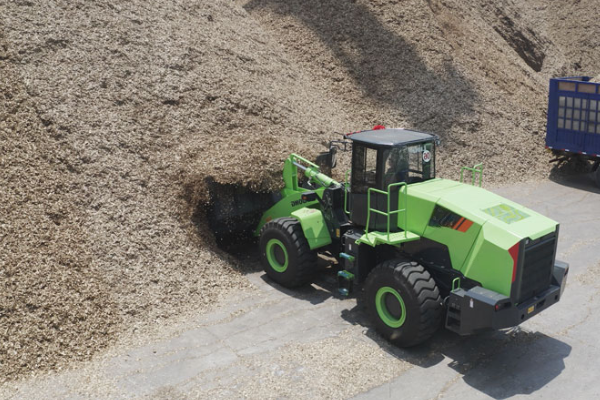
Evaluating the health of the high-voltage battery pack is the single most important step when inspecting a pre-owned Electric Loader. A comprehensive assessment begins with testing the State of Health (SoH) and usable energy capacity. Technicians must connect diagnostic software to analyze the remaining energy capacity against factory specifications, historical degradation curves, and total charge-discharge cycle counts to accurately predict remaining operational battery life.
In addition to baseline capacity checks, a detailed Battery Management System (BMS) telematics inspection is necessary to review system stability. The BMS log provides critical insight into cell voltage balancing, thermal management history, and historical fault code records. Identifying past over-temperature events, voltage imbalances across cell modules, or inverter communication errors ensures buyers avoid units with hidden electrical damage.
Finally, evaluating real-world charge-discharge cycles and fast-charging performance confirms operational reliability on active job sites. Technicians should test fast-charging acceptance rates, inspect charging port connectors for physical wear or thermal discoloration, and run the Electric Loader under simulated load conditions to ensure consistent voltage output without premature voltage drops or rapid thermal throttling.
Essential Maintenance Tips for Used Electric Loaders
Proper preventive maintenance for a pre-owned Electric Loader centers on protecting high-voltage electronics and maintaining efficient thermal regulation. Thermal management and cooling system care are paramount, as battery packs and traction motors generate substantial heat during heavy excavation cycles. Technicians must routinely inspect coolant loops, flush thermal management fluids according to OEM schedules, and keep radiator fins clean to ensure liquid-cooling systems regulate battery temperatures effectively under continuous load.
Next, operators should conduct regular inspections of the high-voltage electrical harness and cabling integrity. All high-voltage orange cables, insulation sleeves, and junction boxes must be checked for physical abrasion, outer jacket wear, or moisture ingress. Maintaining clean, tight, and corrosion-free high-voltage connections prevents electrical resistance spikes, protects delicate control modules, and maintains safe operation on harsh job sites.
Finally, while the electric drive eliminates diesel engine upkeep, traditional hydraulic system efficiency and mechanical powertrain servicing remain vital. Regularly changing hydraulic fluid, replacing return filters, and inspecting electric motor couplings and planetary reduction drives ensures seamless torque transfer. Keeping the hydraulic pump operating at peak efficiency reduces parasitic power draw on the battery pack, allowing the pre-owned Electric Loader to maximize daily runtime per charge.
Conclusion
Investing in a pre-owned Electric Loader offers heavy equipment operators a powerful, cost-effective avenue to modernizing their fleets while drastically lowering total cost of ownership. By bypassing steep initial depreciation and capitalizing on minimal routine maintenance and low electricity costs, contractors can achieve exceptional long-term ROI without compromising on operational output or site versatility. When backed by comprehensive battery diagnostics and proactive thermal maintenance, pre-owned electric machinery delivers clean, reliable productivity that stands equal to traditional diesel models.
To maximize your investment, partner with experienced equipment dealers who provide workshop-certified units complete with verified battery State of Health (SoH) diagnostics and full service histories. Exploring tested, job-ready pre-owned Electric Loader inventory allows your business to capture high-value zero-emission contracts, satisfy strict environmental regulations, and future-proof your job-site capabilities today.
Frequently Asked Questions About Electric Loaders
How does the cold-weather performance of a used Electric Loader compare to traditional diesel machinery?
Cold weather can temporarily reduce lithium-ion battery discharge efficiency and reduce total operating range per charge by 10% to 20%. However, unlike diesel engines that suffer from cold-start issues, gelled fuel, and prolonged idling warm-ups, a pre-owned Electric Loader equipped with an integrated battery thermal pre-heating system delivers immediate full torque and reliable power startup even in sub-zero working conditions.
What are the main safety precautions when servicing high-voltage systems on a pre-owned Electric Loader?
Servicing high-voltage components requires certified technicians trained in electric vehicle safety protocols. Key safety measures include switching off the main high-voltage manual service disconnect switch (MSD), verifying zero-voltage status with insulated testing tools, and wearing high-voltage protective gloves (Class 0/1000V rated) before working near orange cabling, inverters, or battery packs.
How do operating costs of an Electric Loader compare to a diesel loader over a 5-year period?
Over a 5-year operating lifecycle, an Electric Loader typically reduces total energy and fuel expenditures by 60% to 70% compared to diesel. Combined with the elimination of diesel engine oil changes, fuel filter replacements, DPF regenerations, and fan belt maintenance, fleet operators save thousands of dollars annually in total cost of ownership (TCO), offsetting initial acquisition costs rapidly.
Can a pre-owned Electric Loader perform heavy-duty excavation and pushing as effectively as diesel models?
Yes. Electric motors deliver instant peak torque across the entire RPM range, whereas diesel engines require time to spool up to peak horsepower. This immediate torque response gives a pre-owned Electric Loader superior breakout force, faster acceleration into pile banks, and highly responsive hydraulic lift cycles, matching or exceeding traditional diesel performance in heavy excavation.
What warranty options or battery health guarantees are available when buying used electric heavy machinery?
Reputable B2B heavy machinery exporters and dealers offer certified pre-owned programs that include verified battery State of Health (SoH) diagnostics certificates and extended warranties covering core high-voltage components (battery modules, BMS controllers, and traction motors). Always request a full CAN-bus diagnostic report and battery health certificate prior to finalizing your pre-owned purchase.



Company: Shandong Chenxu Heavy Industry Co., Ltd.
WhatsApp: +86 187 6302 1167
Email: [email protected]